


Guardians of the plateau help revive Xizang's wildlife and ecosystems
Updated: 2026-07-23 (Xinhua)  Print
Print 


"There are more animals now and, in a way, that gives us more work," he says. "But it is good work. It means the land is healthier than before, and it means our patrols are worth it."
The station is named after Norbu Yugyel, a police officer who sacrificed his life while apprehending poachers in northern Xizang. From earlier wildlife protectors to the hundreds of rangers now working across the plateau, conservation there has often been a quiet and demanding inheritance.
A herder born on this land, Kalzang Lhundrup sees the change through a lens of personal pride. "I was born here. To be able to protect this land is my greatest happiness."
Monitoring data tell part of the story. Populations of rare wild animals in Xizang have shown a clear recovery trend. Tibetan antelopes have increased from just more than 70,000 at the end of the 20th century to over 300,000 today, while wild yak numbers have grown from several thousand to more than 20,000. The number of black-necked cranes has also risen from fewer than 4,000 to over 10,000.
Across Xizang, the human footprint on the Qinghai-Tibet Plateau is being managed more carefully. The region has built a nature reserve system with national parks as the mainstay. It now has 47 nature reserves and 97 protected natural areas in total, as well as 73 wildlife protection stations.
Conservation in Xizang is not only about keeping people away from nature. It is also increasingly focusing on teaching people how to live near it.
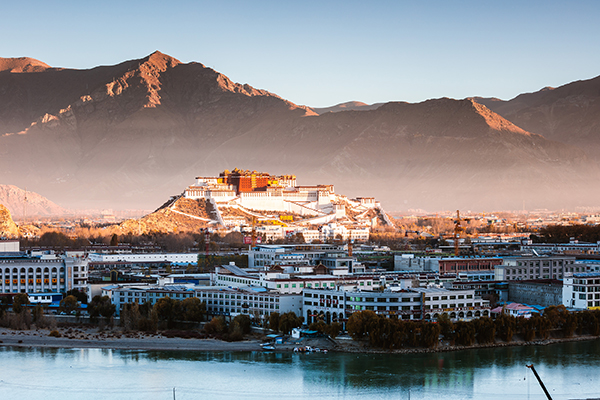
In Lhasa, the same idea appears in a different form at Lhalu Wetland National Nature Reserve, often called the "lung of Lhasa". On summer days, birds skim the water or rest in the shallows. Beyond the reeds and footpaths rise the Potala Palace and residential buildings, bringing the wetland into the everyday life of the city.
Ngawang Tashi, deputy head of the administration bureau of the reserve, says the wetland was not always so healthy. Since 1995, years of protection, restoration and monitoring have helped revive its ecological functions.
In recent times, Lhasa has invested 728 million yuan ($107 million) in two phases of restoration work, helping bring the wetland back to life. Its vegetation coverage has risen to more than 95 percent, and the reserve currently supports 174 bird species, with more than 10,000 birds living and breeding there.
Parts of its patrol paths have been opened to the public in an orderly manner. Residents now go there to walk, take photographs, and watch birds. For many children in the city, this wetland may be where they first learn the name of a black-necked crane.
The water that nourishes Lhalu Wetland eventually flows into the Lhasa River and then into the Yarlung Zangbo River, which runs eastward toward Nyingchi, where ecology has become a livelihood.
Tashi Drolma, a homestay owner in Bomi county in Nyingchi, grew up watching her mother run a family inn more than 20 years ago. As a child, she did not think much about the peach trees in the yard. Only later did she understand that the blossoms had become part of a new economy.
"When I was young, I didn't know peach blossoms could be so valuable," she says. "After I grew up, I realized they are our way to a better life."
In 2025, Nyingchi received 17.4 million tourist visits, and its tourism revenue reached 16.3 billion yuan. The city also creates more than 10,000 ecological jobs each year, helping increase annual per capita income by 3,500 yuan.
Back in northern Xizang, Kalzang Lhundrup still sets out on patrol. The work remains cold, lonely and physically demanding. But each return of the antelope, each crane landing in a wetland, and each village finding income in clean mountains and rivers tells the same story: On the plateau, protecting nature has become another way of keeping life moving forward.